AI-Native Finance Systems Are Getting Acquired Early
Four AI-native revenue systems sold to payments, CRM and accounting giants in ten months. Why the buyers are paying, and what it means for founders and finance teams.
Part of The Market

Intuit bought Sequence this morning. Sequence closed a $20 million Series A on December 16, 2025. Ten months later it sold. Founded in 2021, two rounds, about $39 million raised in total, and out.
That is not a one-off. It is the fourth AI-native revenue system to sell to a payments, CRM or accounting giant in ten months. Stripe, Adyen, Salesforce and Intuit have each bought one. The pattern is clear enough to name: build a finance system AI-first, prove it on AI customers, and an incumbent buys it before it gets big. The incumbents are not waiting for these companies to grow into them. They are buying the AI-native version of their own product while it is still cheap.
I was on the executive team at a billing company that sold to a payments company. I want to lay out the four deals, why the buyers are paying, and what it means if you are a founder in this space or a finance team picking a vendor.
Four deals in ten months
- Metronome. Founded 2019. Raised $128M. Sold to Stripe for about $1B. Announced December 2025.
- m3ter. Seed in 2022. Raised $31.5M. Sold to Salesforce, price undisclosed. Announced June 8, 2026.
- Orb. Founded 2021. Raised $44M. Sold to Adyen for $335M. Announced June 11, 2026.
- Sequence. Founded 2021. Raised about $39M. Sold to Intuit, price undisclosed. Announced October 15, 2026.
Metronome sold for about twice the $470 million valuation it set in a Series C only ten months before. It bills usage for OpenAI, Anthropic and Databricks. Orb raised $44 million in total and sold for $335 million, with Vercel, Replit and Supabase on its customer list. Sequence raised a $19 million seed from Andreessen Horowitz in 2022 before it had launched a product, added a Series A last December, and sold to Intuit this morning. Intuit stock rose more than 6% on the news. In between, Salesforce bought m3ter, a London metering platform that had raised $31.5 million in total, and folded it into Agentforce Revenue Management. Two of the four deals landed in the same week of June.
Last December, Sacra listed the independent usage-based billing players as Metronome, Orb, Lago and Sequence. Three of the four are now owned by someone else or in the process of being bought. Lago is open source and still standing.
Why buy instead of build
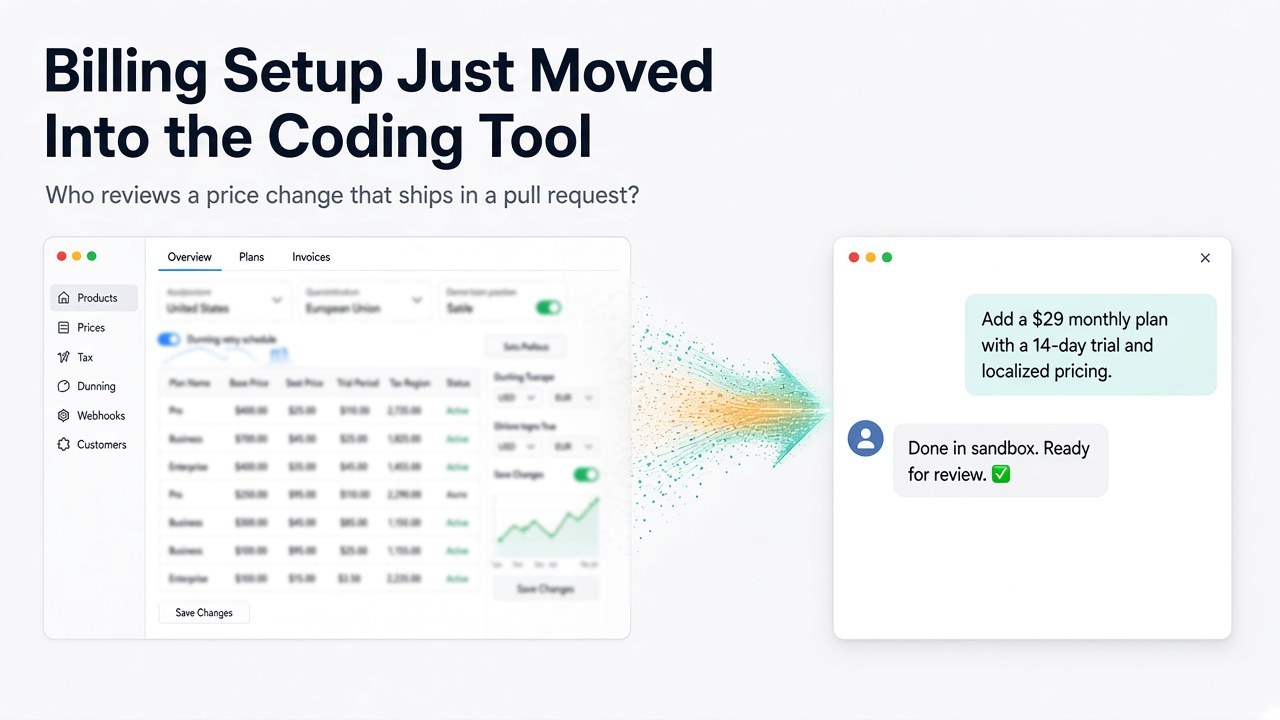
Each buyer gave a different reason. Together they tell one story: the incumbents did not buy billing software. They bought finance systems built AI-first, by teams that had already put agents to work on real revenue data. Sequence sold itself as AI agents working alongside finance teams. Orb raised its Series B to build an AI pricing engine. Intuit’s release names AI engineering talent as part of what it bought.
The customers are the prize. AI companies price by token, by GPU hour, by API call, by outcome. That is a new billing problem, and the startups solved it first. Metronome was already inside OpenAI and Anthropic. Sequence runs revenue automation for some of the fastest growing AI companies. Buy the vendor and you buy the logos.
Build is slower than it looks. Stripe has thousands of engineers and its own Billing product. It still paid about $1 billion for Metronome. As of September 2026, Stripe’s Billing pricing page sends usage-based billing to “Contact Metronome” and keeps only basic metering in Billing. Building it in house meant time Stripe decided it did not have.
Billing is the door to the rest of the stack. Adyen’s stated case is that billing and payments belong together: link what a merchant charges to how the charge gets collected, and you can trigger a payment the moment a customer burns through a credit pool. Intuit’s Ashley Still said complex usage and milestone billing is one of the biggest reasons a growing company picks an ERP. Own the billing layer and you own the moment a customer outgrows QuickBooks.
The talent is part of the price. Intuit’s release names AI engineering talent as one of the things it gets. Riya Grover and her team move into Intuit’s mid-market product group. Alvaro Morales and the Orb founders put some of their proceeds back into Adyen shares. These are team buys as much as product buys.
The market behind the deals
The buyers are chasing a pricing shift that is already most of the way done. Metronome’s January 2025 survey of 100 SaaS companies found 85% had some form of usage-based pricing, and Metronome reports 77% of the largest software companies offer it. Orb’s 2026 study of 80 AI agent companies found 91.3% charge for usage, up from 83.3% a year earlier. A 2026 survey from hy found usage-based models at 37% of traditional software providers but 69% for planned AI features. The surveys use different definitions, so the exact number moves around. The direction does not.
The pain is real on the other side too. A PwC UK and m3ter survey of 350 software vendor executives found 44% of UK business leaders have trouble measuring consumption of usage-based software, which leaks revenue. That is the gap every one of these billing engines was built to close.
Each buyer also disclosed numbers that explain its own move.
Intuit. Mid-market revenue grew 39% in fiscal 2026 and mid-market customers grew 28%. Intuit Enterprise Suite annualized revenue passed $145M in Q4, four times the prior year. Intuit sizes the mid-market at nearly $90B and holds $4.7B in cash. Its fastest growing bet is mid-market ERP, and billing complexity is what pushes a QuickBooks customer to buy an ERP. Sequence plugs the hole.
Adyen. Paid $335M in cash from reserves. Orb was its second acquisition in two months, after Talon.One, and co-CEO Ingo Uytdehaage leads the integration himself. One analyst note to clients read the two deals as a lasting shift by Adyen toward filling product gaps through M&A rather than building.
Salesforce. Bought m3ter to add native metering to Agentforce Revenue Management. The stock fell 3.9% that day, with the deal announced alongside a round of layoffs. Salesforce sells seats. Agents do not need seats. The company bought the meter to price its own AI products, not only to resell billing.
Stripe. Paid about $1B, roughly double Metronome’s $470M valuation from February 2025. Metronome already billed OpenAI, Anthropic and Databricks. Sacra’s read: Stripe builds high-margin software on top of payments and wanted to own the billing stack for the largest AI companies.
Intuit’s Wyatt Jenkins told CFO Dive that mid-market businesses name revenue management and revenue recognition as critical factors when they choose an ERP. That is a product leader explaining a buy in one sentence.
The counterexample: Brex waited
Brex is the other way to run this play. It was valued at $12.3 billion in 2022. Capital One bought it in January 2026 for $5.15 billion, less than half the peak, at a single-digit revenue multiple. The deal closed April 7.
Brex raised big, waited for the IPO window, and sold into a bank at a markdown. Metronome, m3ter, Orb and Sequence raised small, built AI-first, sold early, and got a clean multiple on modest capital. The early sellers did better per dollar raised. That is the whole lesson for a founder in this space.
Who buys next
This part is my read, not reporting. Nobody on this list has said they are shopping. But the pattern so far is simple: each big platform that touches the quote-to-cash flow has bought one AI-native revenue system, and every big platform that has not yet bought one now has a gap its rivals have closed.
Zuora. Private under Silver Lake since February 2025. Already bought Togai, a ten-person metering startup, in 2024 as an acqui-hire, and bought Zephr and Sub(x) before that. It buys to fill gaps, and it needs scale in usage billing to hold its Gartner lead.
Oracle NetSuite, SAP, Sage and Xero. Intuit just made usage billing an ERP feature. Every mid-market ERP that sells against Intuit Enterprise Suite now has to answer it. No public signal yet. The pressure comes from Intuit’s move, not their own statements.
HubSpot. Salesforce put a meter inside its CRM. HubSpot sells to the same mid-market SaaS buyer and has a commerce product with no native metering. No public signal yet.
Ramp and Mercury. Both are moving from spend into full finance operations. Ramp raised $1.85B at a $60B valuation this month and bought Billhop in March. Mercury bought payroll platform Central. Both are buying, not building, to enter new categories, and revenue in is the obvious next product.
PayPal, Block, Checkout.com and Worldpay. Stripe and Adyen both now own a billing layer. The payments players without one sell to the same merchants. No public signal yet.
Bill. Owns SMB accounts payable and receivable. Usage billing is adjacent and its customers are moving up-market. No public signal yet.
And the targets. The AI-native revenue and billing companies still independent that I can find: Lago (open source, $34M raised), Tabs ($91M raised, New York), Hyperline, Solvimon (founded by the team that built Adyen’s in-house billing), LedgerUp, Stigg and Amberflo. Chargebee and Maxio are bigger and subscription-first, but a buyer that wants a full quote-to-cash suite in one check will look at them too.
If the next twelve months look like the last ten, two or three of those names will not be independent this time next year. The founders who have watched Riya Grover and Alvaro Morales exit at Series A and Series B are doing the same math right now.
I watched this happen two years early
I was on the executive team at Invoiced, a billing and accounts receivable platform. Flywire, a payments company, bought us in September 2024. Invoiced was built before the AI wave, but the shape of the deal was the same as Orb and Adyen: the billing layer absorbed by the company that moves the money.
A few things I learned that the press releases skip.
The buyer wants the workflow, not the brand. Billing is where the customer’s contract, usage and payment terms all meet. Whoever owns that screen owns the relationship with the finance team. The product name on the login page matters far less than the data flowing through it.
The first year is about continuity. Every one of these announcements promises existing customers nothing changes. Orb still says customers can keep their own payment processor. That promise is real on day one. Over time, the roadmap bends toward the buyer’s rails, because that is why they paid.
The founders’ job changes the day the deal closes. Riya Grover now runs a product line inside a company with $4.7 billion in cash. That is a different job than running a Series A startup, and most founders find that out after the wire clears, not before.
What to do with this
If you are a founder building AI-native fintech, plan for the early exit as a real option, not a failure. The window for a standalone AI-native finance system closes once each big payments, CRM and accounting player owns one. Stripe, Adyen, Salesforce and Intuit have each bought theirs. Raise what you need to land the logos, not what the market will give you. The logos are what the buyer pays for.
If you are a finance team picking a billing vendor, ask who owns the roadmap. Chargebee is already selling against Orb on the grounds that Orb’s priorities now run through a payment processor. Every rival will make the same pitch. Before you sign, ask the vendor what happens to your processor, your data and your pricing if they get bought next year. Four of them just did.
If you are an investor, note that Andreessen Horowitz put $19 million into Sequence before it shipped and got an exit to Intuit four years later. Seed to strategic sale in four years is a fast, clean return. Expect more funds to underwrite this category on that math.
The list of independents above is shorter than it was in January. Do not bet on all of them staying independent this time next year.
First published on LinkedIn.
Published .
Cite this
Couch, C. (2026). AI-Native Finance Systems Are Getting Acquired Early. Lead to Cash. https://chriscouch.ai/essays/ai-native-finance-systems-getting-acquired-early/
BibTeX
@misc{couch2026ainativefinancesystemsar,
  author = {Couch, Chris},
  title = {AI-Native Finance Systems Are Getting Acquired Early},
  year = {2026},
  howpublished = {Lead to Cash},
  url = {https://chriscouch.ai/essays/ai-native-finance-systems-getting-acquired-early/}
}
Get the Thursday email.
One finding, one data point, one tool, one question.